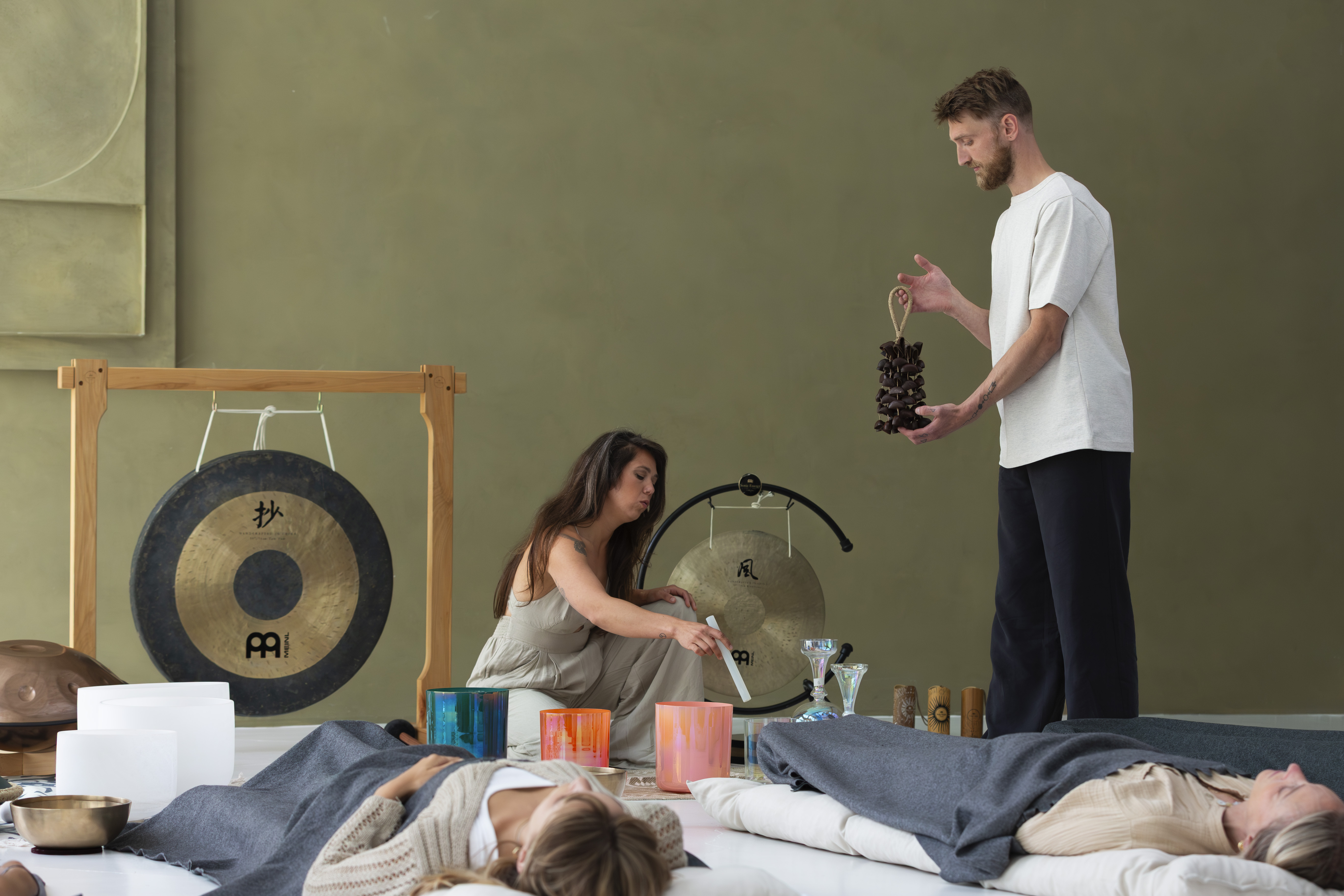
A 6-month mentorship for practitioners who don't just want to play beautiful sessions, but want to make a real difference for the person in front of them, and know exactly how to do that.
In six months you stop guessing and start reading what's happening in someone's body in real time, so you know exactly what they need, and exactly why each session landed. Over 100 practitioners have walked this path with us.
But there's a problem no one really talks about. Plenty of people did a one-day or weekend training, bought their bowls, and started giving sessions. Maybe you did too. There's nothing wrong with starting there, but a certificate doesn't make you a facilitator yet.
And it matters, because people come to you vulnerable. Their nervous system is dysregulated, their body is holding stress, and they are trusting you with that. That comes with responsibility, and a weekend can't prepare you for it. It can't teach you to notice the difference between relaxation and dysregulation, between release and overwhelm.
So from the outside, everything looks fine. You play beautifully, people leave relaxed, the feedback is lovely. But on the drive home, the same question keeps coming back: did you actually help them, or did you just play some nice sounds? Feeling good is not the same as being helped. You can play beautifully and still not know how to facilitate.
Here's what the market won't tell you: this is not something you learn in a weekend. Reading a nervous system in real time, holding space with real responsibility, creating actual safety instead of just comfort, that takes training, grounding, and the four foundations most sound trainings leave out. That is exactly what the next six months are for.
You can play the instruments. Maybe you even understand what they do to the body, though often that piece is missing too. But playing is not the same as facilitating.
Here's the part that's missing: how to read the person in front of you. How to recognize what's happening when someone goes quiet, starts to cry, or suddenly checks out. How to guide an emotion instead of freezing when it arrives. How to know whether someone needs more space, less sound, or something else entirely.
That's the part that actually holds people. And it's the part you learn through depth, practice, and real facilitation.
We spent years, thousands of hours, sharing sound and training practitioners in real sessions. We studied the nervous system science, integrated trauma-informed approaches, and tested rhythm, pacing, repetition, silence, and voice work, over and over, until we knew exactly what creates safety and what doesn't.
That's where the four foundations below come from. Not more instruments, not a fancier certificate, but everything we learned from actually facilitating people, distilled into one method that 100+ practitioners now use.
With one of these, you can work on the surface. To actually guide people in the depth, to read what's happening and know how to respond, you need all four, woven together. That's the difference between playing for people and facilitating them.
"Before this, I felt shaky and like I didn't know enough when I facilitated. Now I attune and name what I sense in the room, and it amazes me how much participants soften the moment I name something, a yawn, or that they're allowed to move. I can finally let go of needing to fix everything and just be with people where they are."
"I came in wanting deeper insight into trauma-aware facilitation. Now I take more time at the start, I'm transparent about what people will hear, and I guide with somatic cues. Students who've known me for a while open up even more, because they feel safer. I left with a genuine sense of deep safety in holding space, something embodied, not just understood."
"I led a session in which I felt more stable and secure than ever, because I grounded myself consciously and felt a real shift in reading the room. This training is a game changer for anyone working with sound, packed with things you can use immediately. I've gained so much more confidence in my somatic approach."
"The session design framework made creating a session clear, easy and even fun. Everyone I gave sessions to during and after my exam said they loved the build-up and the flow. It gives me the confidence to create many more sessions, and it isn't until now that I feel my whole trajectory really comes together."
"I'd already done a lot of work with the nervous system, but now I feel safer facilitating, because everything finally comes together into a toolkit I can rely on. I feel more confident, grounded and relaxed, and I can explain exactly what happened in a session."
"I used to lead purely on intuition. Now I know which tones sit together, which ones create tension, and I never leave people stuck in that tension at the end, I always bring them home. I prepare my sessions differently now: not just by feeling, but by knowing what works and what to avoid."
Four Level 2 modules, each building on the last. Together they give you the understanding and the practical design framework you need.
Many practitioners use their bowls but avoid their voice because it feels too vulnerable. In this module, you learn how to use your voice as a regulating tool, not as a performance, but as a way of helping people feel safe and grounded.
You'll understand how breath, humming, and vocal expression influence the nervous systems in your room. By the end, your voice becomes something you rely on, and your participants feel it.
This is where you stop guessing about what's happening in the room. You'll learn how to recognize when somebody is settling and releasing tension, when they're becoming activated, when they're disconnecting, and when they need less sound instead of more.
You'll understand the difference between releasing stress and a trauma response, and how to respond in a trauma-aware way in real time. Once you can read the room, you can design for it.
Why does one sequence feel supportive while another feels chaotic? You'll learn how rhythm, pacing, repetition, silence, and musical choices influence the nervous system and the overall flow of a journey.
Not to become a musician. To become deliberate.
Most practitioners create sessions intuitively. Few know how to deliberately design an experience from opening to close.
You'll learn how to open a session so people arrive fully present. Build trust before introducing intensity. Create deliberate tension and release. Use silence strategically. Sequence your instruments and voice so each element serves the whole. Close sessions so participants leave feeling complete, not abruptly dropped.
This framework is what practitioners wish they'd had from day one.
The real transformation isn't just in the training hours. It's in what happens between them.
Between each module, you'll have access to coaching, mentoring, and Q&A sessions with Joy and Eddie.
This is where integration happens. Where your questions get answered in real time. And where you learn how to position your practice in the market authentically, so you're not just a skilled facilitator, you're the facilitator people seek out.
You'll explore how to communicate your unique value as a sound facilitator. How to show up authentically in your market. Real-world questions about designing your offerings.
You stop replaying every decision on the drive home. When someone gets emotional, you don't freeze, you respond. That steadiness is contagious: your participants settle faster and go deeper, because they can feel you're not guessing.
You design sessions on purpose, and people feel the difference. They leave feeling genuinely held, they book again, and they bring others. You're no longer one of many. You're the facilitator they come back to.
You know how you'll open it, how you'll build it, and exactly what to do when emotion shows up. A participant becomes emotional halfway through, and instead of panic, you feel calm. You're not guessing whether they need more space, less intensity, or a shift, you feel it, and you respond.
At the end, someone opens their eyes and says, "I felt so safe with you. I've never experienced that before." And that safety wasn't luck, it's what you designed, on purpose. That's the difference six months makes.
This training goes deep, so it's not for everyone. Before you join, we have a personal call together, where we make sure this is the right fit before you commit to anything.
One requirement: you've already done a proper foundational training and can show your certificate. If you're already facilitating and serious about doing it with real depth and responsibility, this is exactly where you belong.
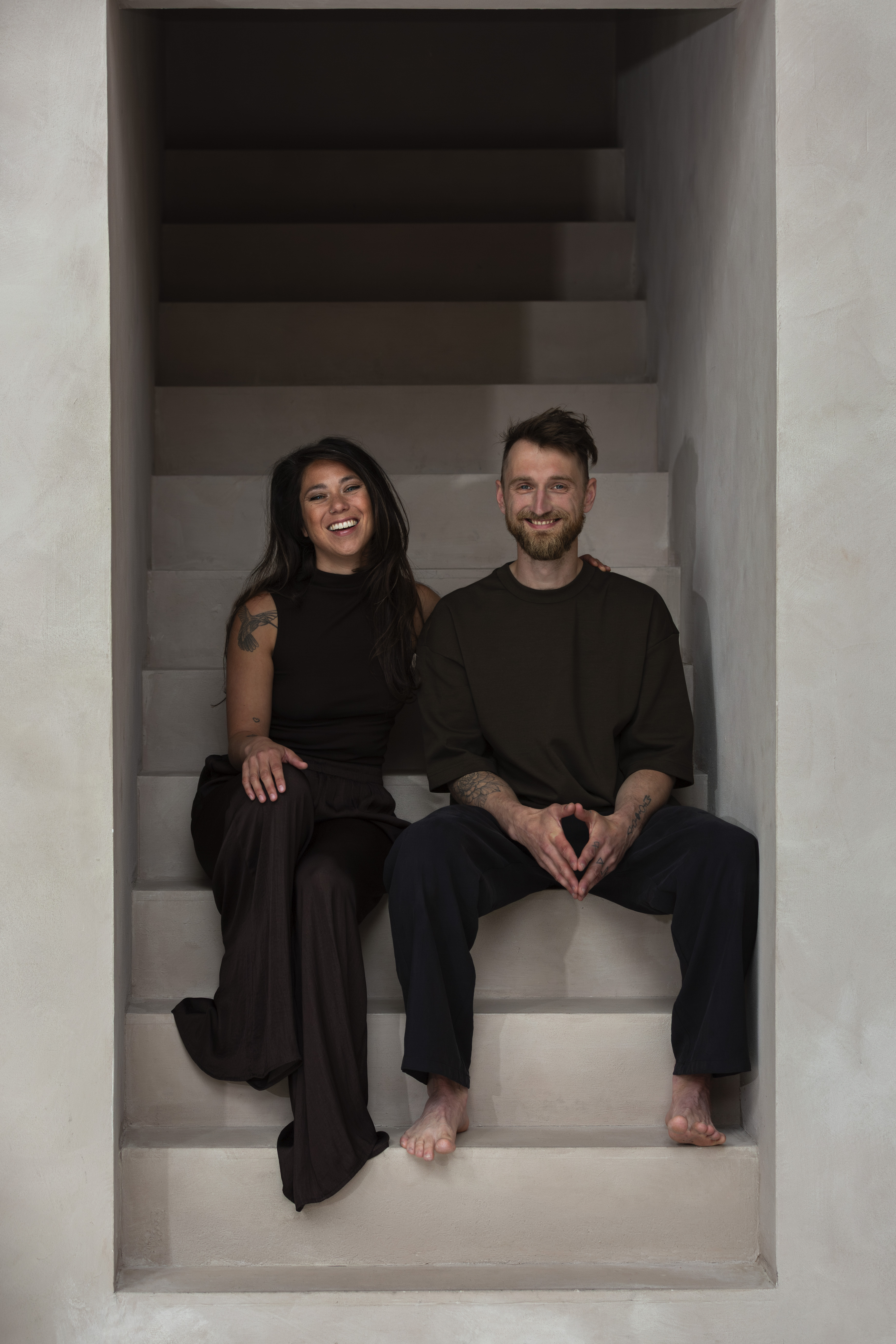
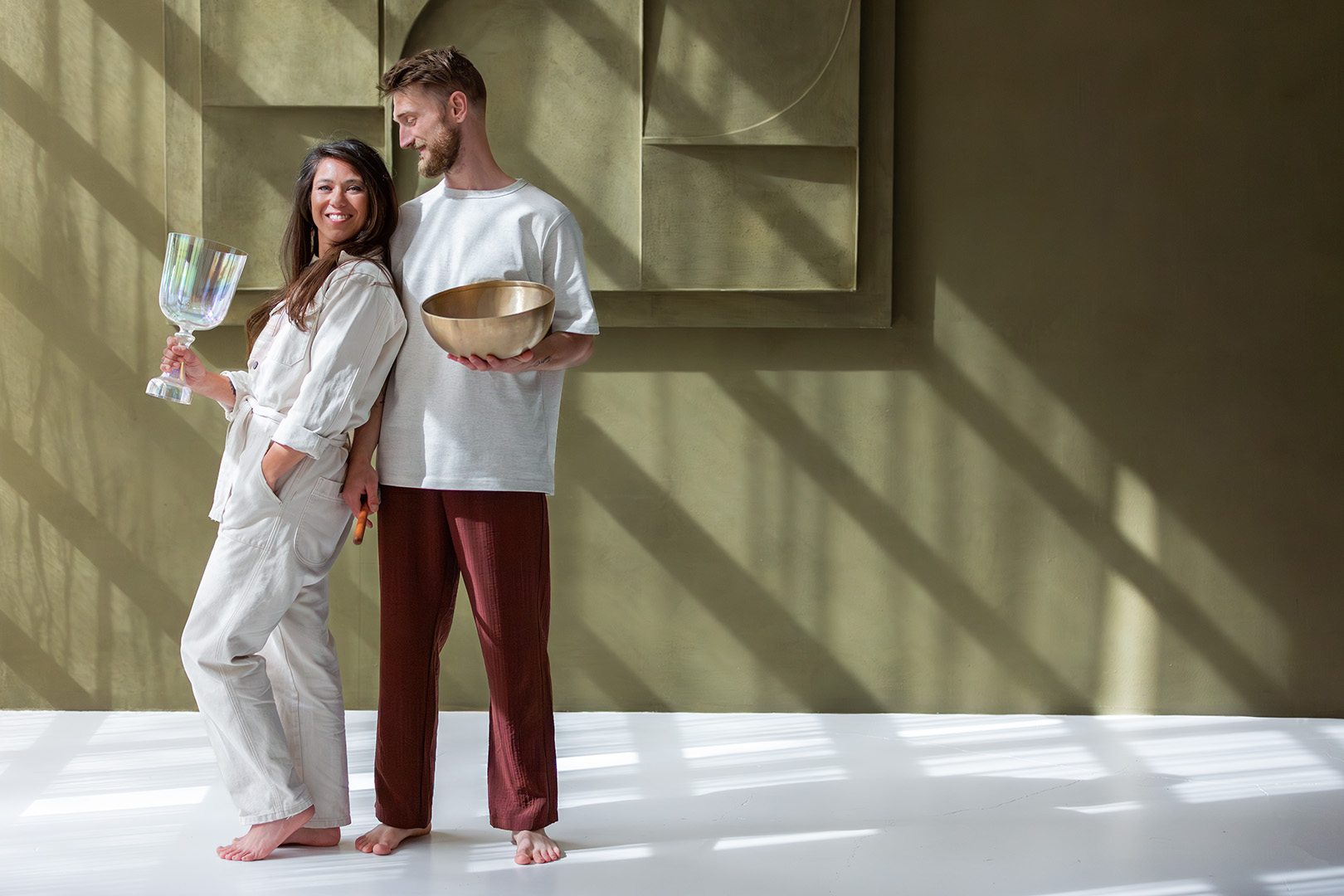
This training holds both the feeling and the science because it comes from two people who each live one side of it. We've led thousands of sessions together, and built this method side by side.
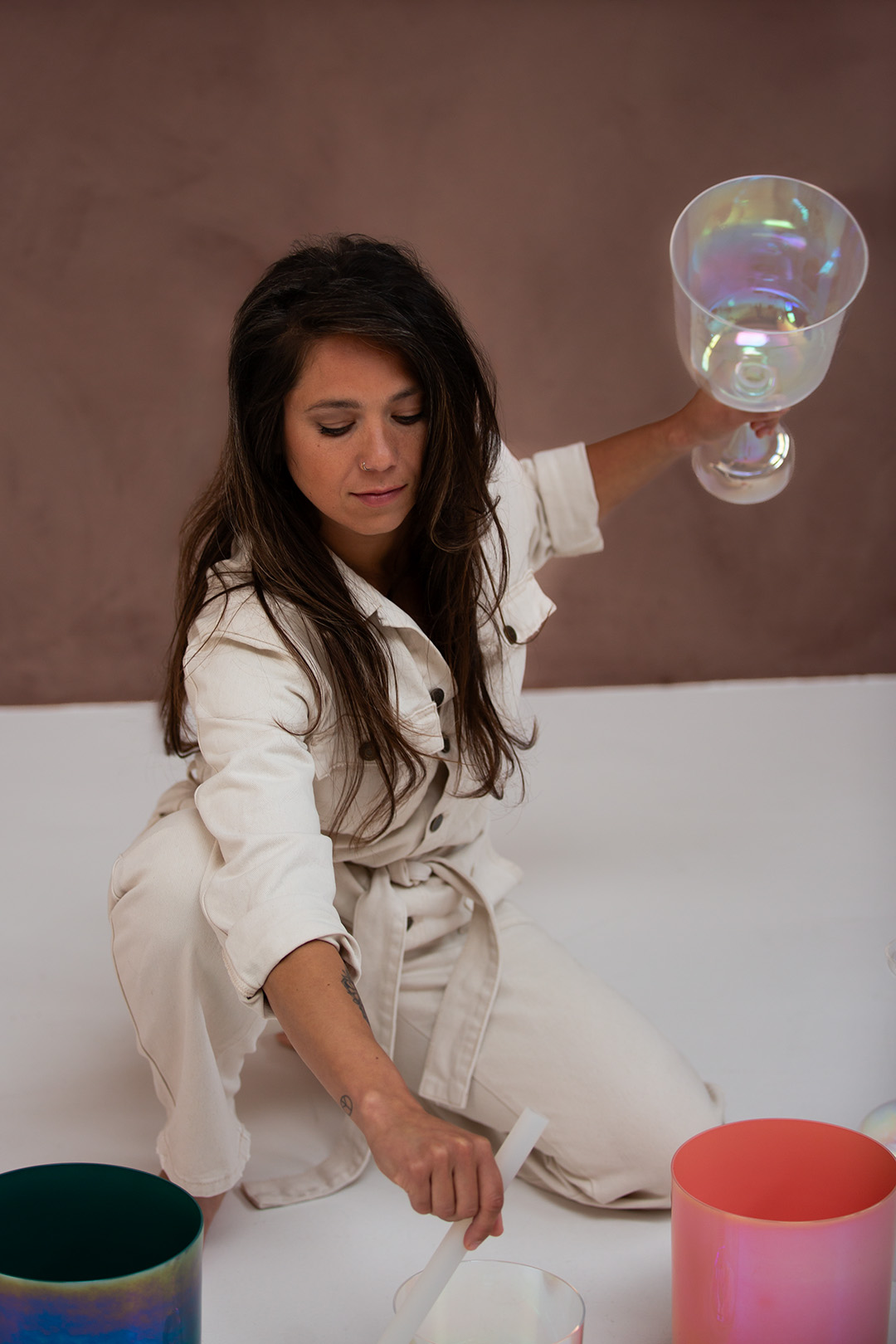
Joy, professional singer, dancer and yoga teacher. Joy brings the embodied, somatic heart of the work.
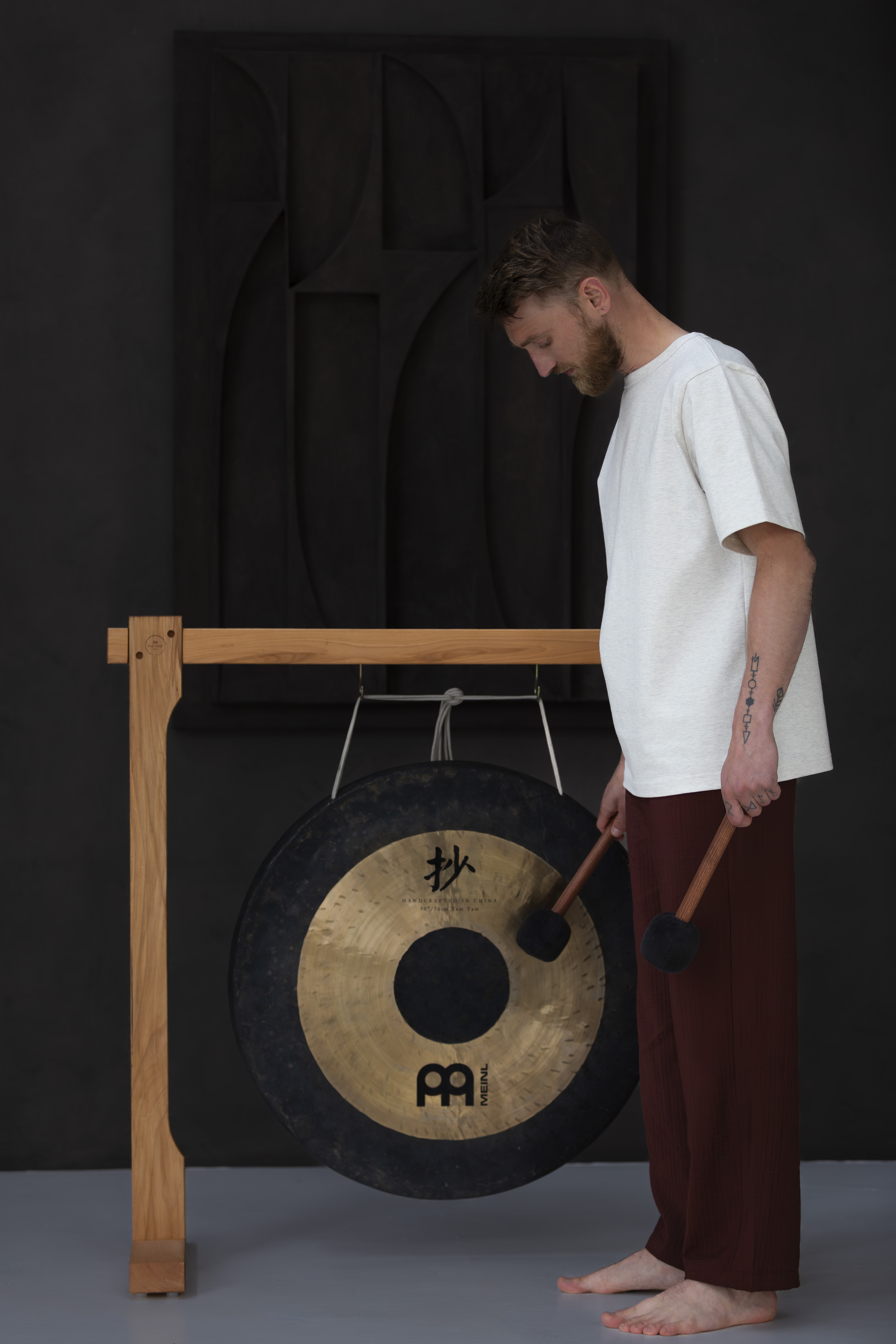
Eddie, professional drummer, Conservatory-trained percussionist and meditation teacher. Eddie brings the structure underneath the soul.
The feeling and the framework. The soul and the science.
Live online sessions on Thursdays, 19:00–20:30 (Amsterdam time), with Musical Intelligence self-paced alongside live sessions. Replays always available.
4 live sessions · Thursdays 19:00–20:30
5 live sessions, including an extra session with Dr. Katie Overbury · Thursdays 19:00–20:30
Q&A sessions, market positioning, personal feedback
Self-paced lessons with live sessions to deepen them, complete in your own rhythm
Space to integrate and ask your questions
4 live sessions · Thursdays 19:00–20:30
Q&A sessions, market positioning, personal feedback
This isn't a course you watch. It's six months of becoming the facilitator people trust, with us beside you the whole way.
Plus a recognized certification pathway (Yoga Alliance & CPD), practice assignments and daily resources, all included.
Total Value
Over €4,450
This training is designed for practitioners who've already done training and are giving sessions. It's not about starting from scratch, it's about deepening what you already know and building confidence in what you're doing.
Yes. The Embodied Sounds Method® works across all sound modalities because it's rooted in two universal truths: how the nervous system responds to sound, and how to structure an intentional journey. Both apply everywhere.
Intuition without structure can become exhausting. A framework gives your intuition something to land on. It turns "I feel like something worked" into "I designed this to work, and I understand why." That's where real confidence comes from.
The training is designed so you can integrate at your own pace, modules are recorded and available to revisit. But we ask that you show up for the live sessions and engage with your practice. This is mentorship, not passive consumption.
Replays are available. You can watch later. But we do encourage live attendance when possible because the community and real-time interaction are part of the transformation.
Yes. €2,900 upfront, or €490/month for 6 months.
Not because of the sounds. Because of what you can finally do: read the room, hold the emotion, design the journey, and know exactly why it landed.
You already know how to play. This is where you learn to guide people with real depth.
Limited spots. One call to find out if it's you.
Copyrights 2025 | Sound Healing School™ | Terms & Conditions